Start by deciding whether DLV Vision belongs on your consultation list
Choosing a vision-correction practice starts with a practical question: does the practice offer the options you want to discuss, in a setting you can reach, with a process that lets an ophthalmologist evaluate your eyes and goals? For adults in Ventura and Los Angeles County who are considering LASIK, PRK, or implantable lenses, DLV Vision belongs on that initial consultation list because its Westlake Village office provides vision correction and medical eye care, including LASIK, and its documented discussion extends to PRK and EVO ICL. Your consultation list is not a treatment decision. It is a short list of practices where a useful professional conversation may begin.
A consultation-first approach keeps three decisions separate:
- Practice fit: Does the organization provide the procedure categories you want to compare?
- Evaluation fit: Can the clinical team examine your vision, eye health, prescription, and relevant history before discussing a procedure?
- Practical fit: Can you access the office or available visit format, understand the financial conversation, and submit an inquiry when you are ready?
The practice provides LASIK care in Westlake Village and serves patients across Ventura and Los Angeles counties through multiple locations. It also offers a range of vision-correction discussions rather than asking you to select a procedure from a service label alone. The appropriate path still depends on professional evaluation. LASIK, PRK, and implantable lenses should be discussed as possible paths to assess, not as interchangeable choices or promised outcomes.
You can also use the first contact to organize the questions that matter before any procedure is discussed. Have your current correction, relevant eye history, and main visual priorities ready. Then ask which visit format and location are appropriate for beginning the evaluation. This keeps the conversation focused on your situation without treating an online service description as a personal recommendation.
The useful next question is not whether a website can make you eligible. The useful question is whether the practice can help you determine which option, if any, fits your eyes and priorities.
DLV Vision provides documented LASIK care in Westlake Village
The practice provides vision correction and medical eye care, including LASIK, through its Westlake Village office. The Westlake Village location is therefore directly relevant if you live nearby or want to begin your comparison with a practice serving Ventura and Los Angeles counties. Our documented service information describes the office as a place for vision correction and medical eye care, while the broader practice information describes LASIK services across multiple county locations.
LASIK uses a laser to reshape the cornea and correct nearsightedness, farsightedness, or astigmatism. That description explains the procedure category, not your eligibility for it. A procedure page can help you understand what you are asking about, but it cannot replace measurements, an eye-health review, or a discussion of your visual priorities.
Our LASIK surgeons use advanced laser and PRK technology across multiple Ventura and Los Angeles County locations. That practice information gives you a reason to ask how the available procedure options relate to your examination findings and what technology would be planned for your case. It does not establish that a particular technique is suitable for you or that a particular visual result will follow.
You can use the Westlake Village service information as a starting point for four practical questions:
- Where would your evaluation take place? Ask which office or visit format is appropriate when you contact the practice.
- Which procedures should you discuss? Bring LASIK, PRK, and implantable lenses into the conversation if more than one category may be relevant to your goals.
- What must the examination clarify? Ask how your prescription, corneal measurements, eye health, and medical history affect the discussion.
- What should you bring to the first conversation? Prepare your current correction, relevant history, and a short description of the visual tasks you want to improve.
The local setting matters because a consultation is easier to use when you know what you want to ask and which service category prompted your inquiry. Location alone, however, does not answer the clinical questions. Use it to identify a practical starting point, then let the evaluation address suitability.
The point of identifying a local LASIK service is to reach an informed consultation, not to convert a location into a conclusion about treatment.
The available vision-correction discussion extends beyond LASIK
The available vision-correction discussion at the practice includes LASIK, PRK, and EVO ICL, so your first conversation does not have to begin with a fixed assumption about which procedure you will receive. LASIK reshapes the cornea with a laser. PRK is another laser vision-correction category identified in the practice information. EVO ICL is described as a reversible, implantable lens option.
Its availability does not determine whether an ICL is appropriate for you; your examination findings and medical history still control the clinical conversation.
The distinction matters because the same goal can lead to different questions. You may want less dependence on glasses or contacts, but the route to discuss that goal can depend on the shape and health of your eyes, your prescription, and the way you use your vision. A consultation should connect those factors rather than treat the procedure names as a menu from which you choose independently.
Bring the following comparison points to the appointment:
- Corneal approach: Ask what the examination indicates about a corneal laser procedure such as LASIK or PRK.
- Lens-based approach: Ask whether an implantable lens belongs in the discussion and what examination findings would support that conversation.
- Visual priorities: Explain whether distance vision, near tasks, work demands, recreation, or reduced dependence on correction matters most to you.
- Long-term expectations: Ask how the proposed option relates to your current prescription, eye health, and realistic expectations.
It can help to phrase the opening question broadly: “Which of these options should remain under consideration for my eyes, and why?” Follow that with a request to connect the answer to specific examination findings. This approach keeps the discussion comparative without asking you to make a clinical judgment from procedure names alone.
The appropriate option depends on your health, vision needs, lifestyle, and realistic expectations. An ophthalmologist can help assess whether LASIK, PRK, or an implantable lens fits your situation. The practical action is to bring the full range of relevant options into the consultation, then let the evaluation narrow the discussion.
Overview
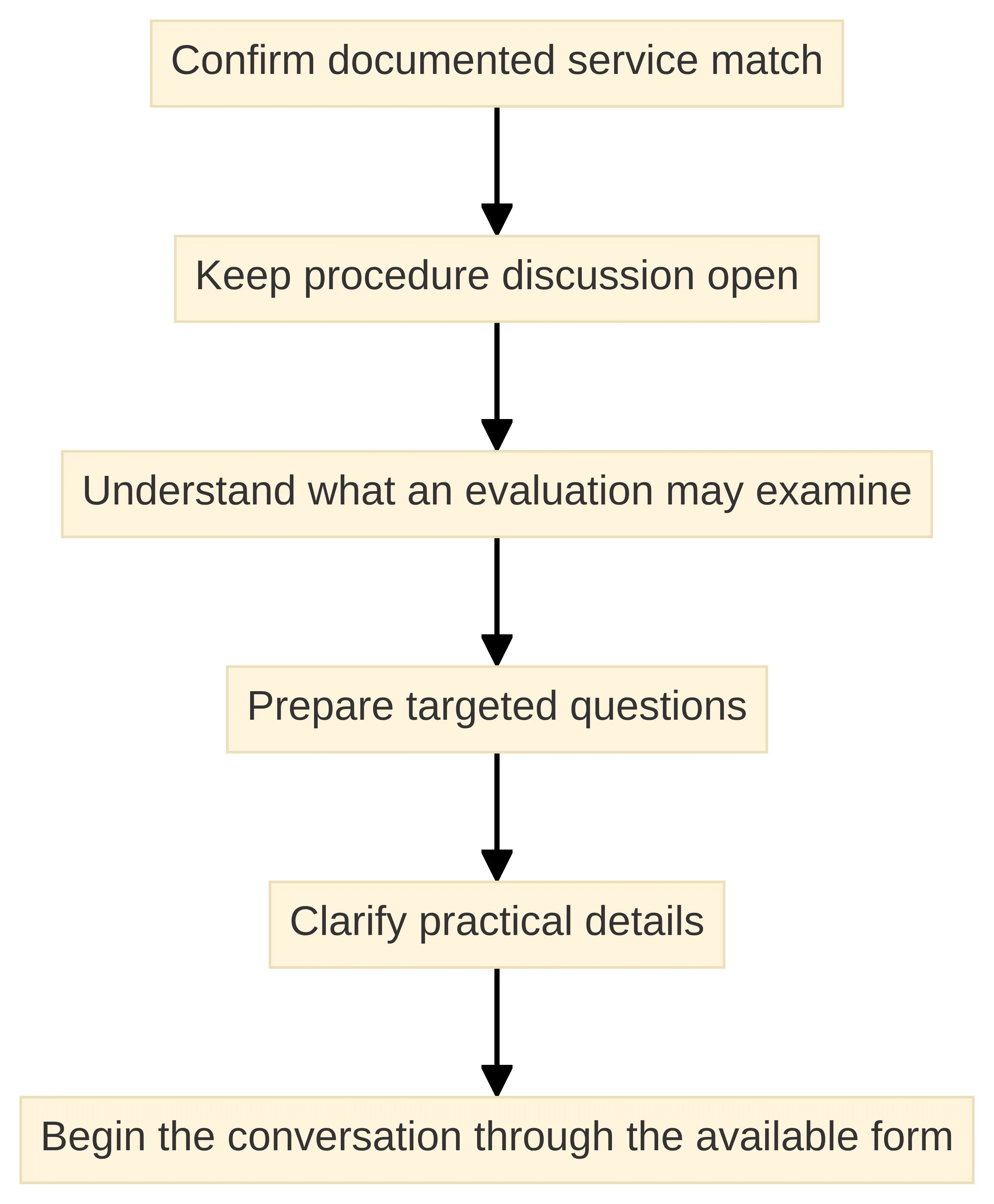
The decision guide follows a consultation-first path for assessing a vision-correction practice:
-
Confirm the documented service match. Our Westlake Village office provides vision correction and medical eye care, including LASIK. Our practice information also identifies LASIK and PRK technology across multiple Ventura and Los Angeles County locations, along with EVO ICL as an implantable lens option for people who may not be ideal LASIK candidates. This tells you which topics you can bring to the practice; it does not tell you which procedure you qualify for.
-
Keep the procedure discussion open. LASIK, PRK, and implantable lenses address different clinical questions. Your goal, prescription, eye health, medical history, and examination findings should shape the conversation rather than a general preference made before the appointment.
-
Those steps give an ophthalmologist information needed to discuss whether a laser procedure can be considered.
-
These questions help you learn how the practice would approach your situation without asking you to assume a result in advance.
-
Clarify practical details. We offer financing and affordability options for LASIK, EVO ICL, and other procedures, but available terms should be discussed with our team. You can also ask about the appropriate office, consultation format, and what information to provide when you inquire.
-
Begin the conversation through the available form. The inquiry form gives you a direct way to request contact about your goals. A consultation can then address candidacy and procedure choice in the context of your own examination.
This sequence gives you a way to assess relevance without turning service information into a promise. Match the documented options first, prepare for an evaluation second, and make the treatment discussion personal only after the clinical review.
Before you submit an inquiry, write down three items: the vision change you want to discuss, the procedures you want explained, and the question that would help you decide whether to continue. A short, focused note gives the first conversation a clear starting point and makes it easier to distinguish general information from a personal clinical answer.
Do not choose a procedure from the option list alone
Procedure choice requires more than seeing LASIK, PRK, and implantable lenses listed together. A service list tells you what can be discussed at the practice; it does not show which option fits your eyes. The appropriate vision-correction path depends on your health, vision needs, lifestyle, and realistic expectations, with an ophthalmologist assessing whether LASIK, PRK, or an implantable lens fits your situation.
LASIK uses a laser to reshape the cornea for nearsightedness, farsightedness, or astigmatism. That general mechanism helps you understand the procedure, but it does not answer whether your corneal measurements, prescription, or eye health support a LASIK discussion. PRK should be approached through the same evaluation-first principle. An implantable lens creates a different discussion, particularly where the practice may consider ICLs for irregular corneas, dry eyes, or prescriptions outside the acceptable range for LASIK or PRK.
Use your goals to frame the appointment, not to make the decision before it. Write down what you want to change about your daily vision and what you want to preserve. For example, you might describe how often you use glasses or contacts, which distances matter most, or which work and leisure activities shape your priorities. Those details give the clinical team context for the examination and discussion.
Avoid treating any of these statements as a personal determination:
- A general description of LASIK does not establish candidacy.
- An ICL option for people who may not be ideal LASIK candidates does not establish that an ICL is appropriate for you.
- A practice’s availability of multiple procedures does not mean that every option is suitable for every prescription or eye.
- A consultation invitation does not predict a visual outcome, recovery course, or final treatment plan.
You can also separate two questions that are often blended together: “Can this procedure be discussed here?” and “Does this procedure fit my eyes?” The first is answered by the documented service range. The second requires examination findings, medical history, prescription information, and an ophthalmologist’s clinical judgment.
The direct action is simple: list the procedures you want to understand, then ask the ophthalmologist to connect the options with your examination findings and goals.
What a professional evaluation may clarify
A professional evaluation may clarify whether LASIK or another corrective eye-surgery category can be considered for your eyes.
We assess LASIK eligibility using your medical history, current prescription, and other health and eye-related factors. That assessment is why a consultation should include more than your current glasses or contact-lens prescription. Bring a complete account of your eye-care history, relevant health information, and any questions about how your daily vision affects the decision.
A useful evaluation can help organize several separate issues:
- Your current correction: What your prescription is and how it has changed over time.
- Your eye health: Whether other eye conditions or surface concerns belong in the discussion.
- Your corneal measurements: What mapping and thickness measurements indicate about a corneal laser procedure.
- Your visual goals: Which distances and activities matter most in your daily life.
- Your procedure questions: Whether LASIK, PRK, or an implantable lens should remain under consideration.
We offer free consultations to help determine candidacy for LASIK and other corrective eye surgeries. A free consultation is an access point for discussing your situation; it is not a promise that you will qualify or that a particular procedure will be recommended. The clinical value comes from using the conversation to connect your history, examination findings, and goals.
To prepare, gather the information that can make the discussion more specific:
- Your current glasses or contact-lens prescription, if available.
- The approximate timing of any prescription changes you remember.
- Relevant eye conditions, previous procedures, and health factors.
- The visual tasks that matter most at work, at home, or during recreation.
- A short list of questions about alternatives, recovery, and expectations.
If travel or scheduling affects how you begin, ask which visit format is appropriate for your needs. Whether the first conversation occurs by video or in person, personal treatment decisions require an ophthalmologist’s evaluation.
Use the consultation to compare options, not presume eligibility
A useful consultation compares options against your examination findings and priorities instead of asking you to presume eligibility. LASIK, PRK, and implantable lenses can remain part of the same conversation while the ophthalmologist determines which categories fit the information gathered during your evaluation.
| Option under discussion | What the practice information establishes | What you should ask the ophthalmologist |
|---|---|---|
| LASIK | LASIK uses a laser to reshape the cornea and correct nearsightedness, farsightedness, or astigmatism. | What do my prescription, corneal measurements, eye health, and goals indicate about considering LASIK? |
| PRK | PRK is identified in the practice information as part of its laser technology and vision-correction discussion. | How does the proposed laser procedure relate to my examination findings and visual priorities? |
| EVO ICL | We offer EVO ICL, a reversible implantable lens option for patients who may not be ideal LASIK candidates. | Does an implantable lens belong in my discussion, and what findings would guide that assessment? |
The comparison table is a question-planning tool, not a ranking. It does not establish that one option is preferable for you. A professional evaluation should connect the procedure category with your medical history, current prescription, eye-related factors, corneal measurements, and expectations.
You can make the appointment more productive by separating what you know from what you want clarified:
- Known: You are considering reduced dependence on glasses or contacts.
- Known: The practice documents LASIK, PRK, and EVO ICL as relevant vision-correction topics.
- To clarify: Which options fit your eyes and prescription.
- To clarify: What technology would be used and why.
- To clarify: What recovery, visual result, and follow-up discussion applies to the proposed procedure.
A second useful distinction is between the reason an option is being considered and the condition that would support it. For example, a goal such as less dependence on contacts explains why you are seeking consultation. Corneal measurements, eye health, prescription, and medical history help the ophthalmologist determine which procedure categories can remain under discussion. Ask for both parts of that explanation.
Bring this distinction into the room. The direct action is to ask for an option-specific explanation tied to your examination rather than selecting a procedure from a general description.
Prepare questions that make the first conversation useful
Consultation questions can turn a general interest in vision correction into a focused conversation about your situation. Before the appointment, write down what matters most to you and take the list with you.
Use questions such as these:
- About the procedure: Which option are we discussing, and what makes it relevant to my prescription and goals?
- About the clinical reasoning: What did the examination show about my corneal measurements, eye health, and current prescription?
- About alternatives: Should LASIK, PRK, and an implantable lens all remain in the discussion for my situation?
- About the process: What should I expect during evaluation, preparation, procedure planning, and follow-up?
- About recovery: What recovery timeline applies to the procedure being considered?
- About visual expectations: What visual result is realistic for my eyes, and what factors could affect that discussion?
- About the information you receive: Which details should you review before deciding whether to proceed?
Our doctors and staff take time to understand your eyesight needs and guide you through the LASIK process. You can use that conversation to explain your daily visual demands instead of describing your goal only as wanting better vision. Mention the distances you use most, your dependence on correction, and any concerns you want addressed.
Prepare those details before the appointment so the clinical team can consider them alongside the examination. If you are comparing an implantable lens with a corneal procedure, ask what specific findings keep both options in or take one option out of the discussion.
It is also useful to ask the team to separate information that applies generally from information that applies to your examination. Ask which findings support the proposed discussion, which alternatives remain open, and what question should be answered before you make a decision. This gives you a clearer record of the reasoning rather than a list of procedure names.
A short written list is enough. The goal is not to create a script or force a decision during the first conversation. The goal is to leave with a clear understanding of what was evaluated, which options remain relevant, and what the next clinical step would be.
Clarify access and affordability before making plans
Access and affordability belong in the first conversation because practical details can shape how you plan an evaluation. Our Westlake Village office provides vision correction and medical eye care, including LASIK, and our LASIK services extend across multiple Ventura and Los Angeles County locations. Ask which location and visit format fit the consultation you want to arrange.
We offer a variety of financing and affordability options for LASIK, EVO ICL, and other procedures; available terms should be discussed with our team. Ask the team to explain the provider, rate, eligibility requirements, payment amount, and any other terms that apply to the procedure under discussion before making financial plans.
The practice’s appointment information directs you to review LASIK options, pricing, and the LASIK Savings Calculator before your visit. Use that information to prepare questions about the financial conversation rather than treating an online figure as a personal quote. You can ask:
- What costs relate to the evaluation and what costs relate to a procedure?
- Which financing or affordability options apply to LASIK, PRK, or EVO ICL?
- What terms, eligibility requirements, or payment details should you discuss with the team?
- Which office or visit format should you use to begin the consultation?
Ask whether a video visit is appropriate for your initial conversation and which examination steps require an in-person appointment.
A simple planning note can keep these issues separate. Record the location or visit format you want to ask about, the procedure categories you want explained, and the financial questions that affect your planning. Then submit the inquiry with enough context for the team to direct the conversation appropriately.
The practical boundary is clear: use the available financial and access information to prepare questions, then discuss personal terms and clinical next steps with the practice team.
Key Highlights
The key points for assessing a vision-correction practice are straightforward:
- Documented LASIK care is available in Westlake Village. Our Westlake Village office provides vision correction and medical eye care, including LASIK.
- The local service connection extends across the two-county area. We use advanced laser and PRK technology across multiple Ventura and Los Angeles County locations.
- The procedure discussion can include more than LASIK. We offer EVO ICL, a reversible implantable lens option for patients who may not be ideal LASIK candidates.
- An option list is not an eligibility decision. The appropriate choice depends on your health, vision needs, lifestyle, and realistic expectations.
- An evaluation may include several types of information. Vision testing, checks for other eye problems, and measurements and mapping of the corneal surface and thickness may be part of a LASIK evaluation.
- Your history belongs in the decision. We assess LASIK eligibility using your medical history, current prescription, and other health and eye-related factors.
- A consultation is the useful bridge between interest and a personal plan. We offer free consultations to help determine candidacy for LASIK and other corrective eye surgeries.
- Practical planning is part of the process. We offer financing and affordability options for LASIK, EVO ICL, and other procedures, with available terms discussed with our team.
Taken together, these points support a measured next step: identify the procedures you want to understand, prepare your medical and vision history, and allow an ophthalmologist to connect the options with your examination findings.
Know what this information cannot decide
Information about a practice cannot decide whether you are eligible for LASIK, PRK, or an implantable lens. A service page can show which topics the practice handles, while an evaluation must address your prescription, eye health, medical history, corneal measurements, visual priorities, and expectations.
Your individual cost, financing terms, recovery timeline, insurance or payment arrangements, and visual result require a procedure-specific conversation after the appropriate evaluation. We offer financing and affordability options, but available terms should be discussed with our team.
A general description cannot answer every question about your eyes. LASIK uses a laser to reshape the cornea, but that mechanism alone does not establish that LASIK fits your situation.
You can use this boundary as a decision rule:
- If you need to know whether a procedure category is available, review the documented service information.
- If you need to know whether an option fits your eyes, arrange a professional evaluation.
- If you need to understand personal cost or financing, discuss available terms with the practice team.
- If you need to begin the conversation, use the available inquiry form.
Only an ophthalmologist’s evaluation can determine individual suitability and guide the treatment discussion. Keep the first contact focused on gathering the information needed for that conversation rather than seeking a conclusion from general material.
Begin with the available inquiry form
The available inquiry form gives you a direct way to begin discussing LASIK, PRK, or implantable-lens options with the practice. Before submitting it, note your main visual goals, current correction, relevant medical or eye history, preferred location, and the questions you want answered. Our free consultations help determine candidacy for LASIK and other corrective eye surgeries, while an ophthalmologist’s evaluation guides individual suitability and procedure choice.
For adults in Ventura and Los Angeles County, especially near Westlake Village, this is a practical way to move from general service information to a focused conversation. Bring the full option range into the discussion, ask how the examination findings shape the recommendation, and treat cost, financing, recovery, and visual expectations as questions to address directly with the team.
The right first step is not assuming which procedure you will receive. It is providing enough context for the practice to begin an individualized consultation.
Questions to consider before contacting DLV Vision
How can I prepare for my consultation at DLV Vision?
Before your consultation, prepare a list of questions about the procedures, your eye health history, and your visual goals. Bring your current prescription and any relevant medical information.
Does DLV Vision offer financing options for LASIK and other procedures?
Yes, DLV Vision offers various financing and affordability options for LASIK, EVO ICL, and other procedures. It’s best to discuss specific terms and eligibility with their team during your consultation.
Can I have a telemedicine consultation for LASIK at DLV Vision?
Yes, DLV Vision offers private and secure telemedicine video visits for LASIK consultations, cataract evaluations, and routine eye problems.
How do I know if I am a candidate for LASIK or other procedures?
Candidacy for LASIK or other procedures is determined through a professional evaluation that considers your medical history, current prescription, and eye health.
What is the next step if I want to explore LASIK options at DLV Vision?
The next step is to submit an inquiry through their available form to request a consultation, where you can discuss your vision correction options.