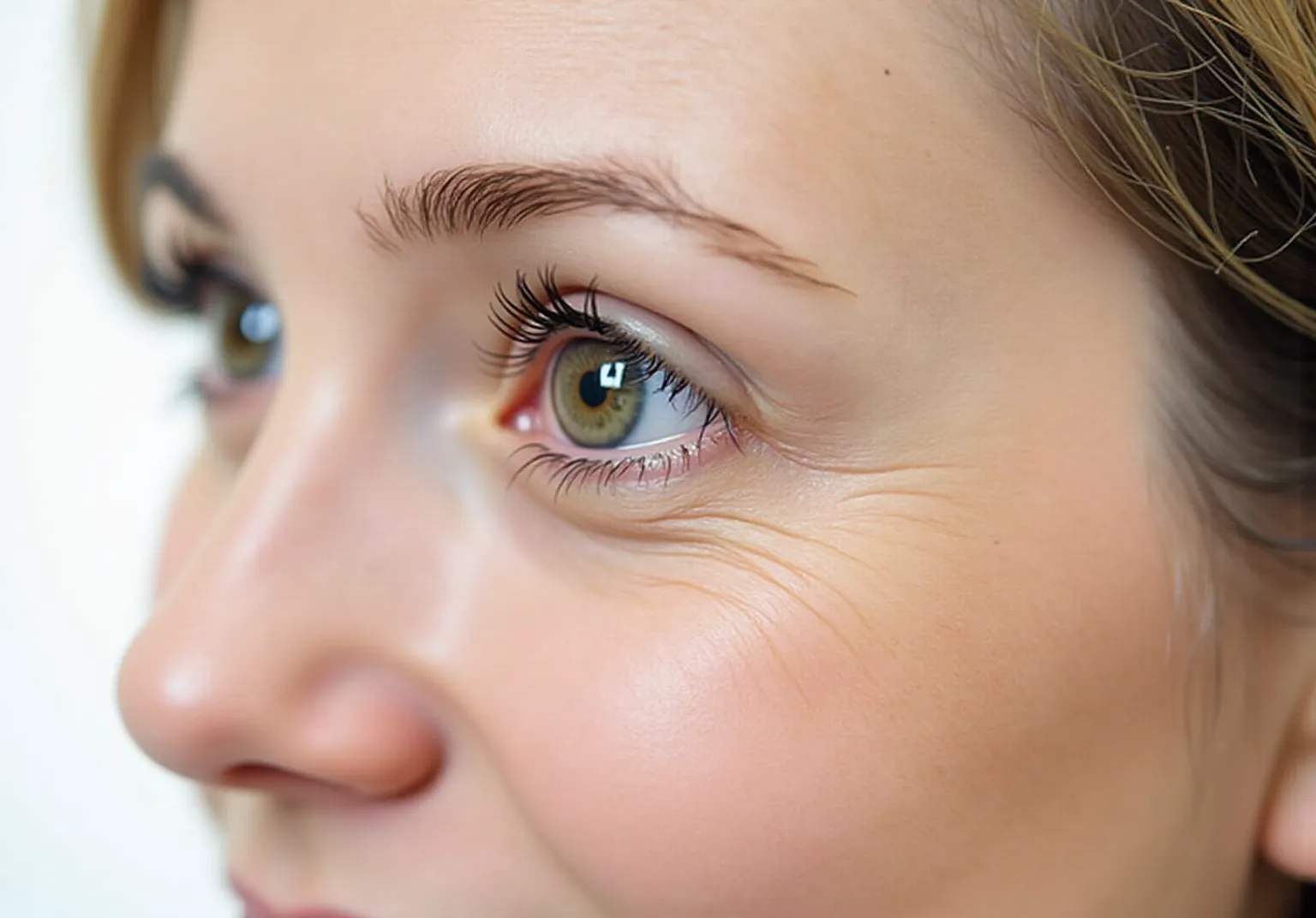
Excess tearing and impaired drainage: two possible pathways
One-sided tearing may involve excess tear production or impaired drainage.
In adults, epiphora—the clinical term for excessive tearing—is nonspecific and can have a broad range of causes. Tears may be excessive at baseline, or reflex tearing may occur in connection with decreased basal tearing. More than one factor may contribute, so a single observation rarely settles the question.
Surface irritation can cause watery eyes; lower-eyelid malposition and impaired tear drainage are other possible contributors. What happens around the episode and what other symptoms accompany it can provide context, but those clues do not establish a diagnosis. The practical question is whether the watering settles, returns, or comes with other symptoms—and whether an eye examination is needed to clarify the cause. Here, basal refers to baseline tear production, while reflex tearing is the response described in connection with decreased basal tearing. This distinction helps explain why watering can occur alongside a dry-eye possibility, without identifying the cause in an individual.
Wind or cold can trigger tearing, but does not settle why
Tearing in wind or cold can happen in a normal eye, with dry eye, or with partial blockage of the tear-drainage pathway. That range makes the weather a clue, not an answer. If your left eye waters outside in chilly or windy conditions, the timing alone cannot tell you which explanation fits.
Watering indoors is often associated with a lower eyelid that sits out of position or with an obstruction to tear outflow. “Often” does not mean always. An indoor episode still needs to be considered alongside your other symptoms and the full pattern.
Dry eyes can also water more in cold or windy weather, cigarette smoke, or dry heat. A foreign-object sensation that comes and goes, particularly toward the end of the day, is another common feature. The combination may seem surprising: watering does not rule out dry eye. These details can help you describe what is happening, but they do not establish that dry eye is causing your tearing.
A useful comparison is whether the watering appears mainly outdoors in wind or cold, or also occurs indoors. Add any sensations you notice and whether the episode settles or returns. This record describes the pattern without treating a trigger as proof of a cause.
Irritation clues describe the episode, not a diagnosis
Irritation of the eye’s surface can cause watery eyes. Possible sources include conjunctivitis, blepharitis, an inwardly turned eyelid or eyelashes, a corneal scratch, or a foreign body. These are different possibilities; noticing watering does not tell you which, if any, is present. Conjunctivitis involves the membrane lining the back of the eyelid and covering the front of the eye; blepharitis is inflammation at the eyelid edges. These terms describe different sites of irritation, not conclusions you can draw from tearing alone.
Redness is a common feature of surface irritation, while itching is a feature of allergic conjunctivitis. If your left eye is red or itchy, note that alongside the watering. It adds context, but it is not enough by itself to identify the cause. Nasal irritation associated with allergies or an upper respiratory infection can also occur with a runny nose, sneezing, or nasal congestion. Those accompanying nasal symptoms are useful context, but they do not determine why one eye is watering.
A corneal scratch or foreign body can be associated with pain, light sensitivity, and a gritty or foreign-object sensation. These symptoms do not prove that a scratch or foreign body is present. If you have them with watering, include them when arranging an eye examination so the cause can be assessed.
When you describe the episode, use the words that match what you feel or see: itching, grittiness, pain, light sensitivity, or redness. Keep observations separate from guesses about a condition. A precise account of the symptoms is more useful than trying to name the cause from one clue.

Tear overflow may involve eyelid position or drainage
Eyelid position and tear drainage are two possible parts of the explanation for overflow. Older people are more likely to have eyelid malposition and multiple contributing factors. In younger people, eyelid malposition is less common, while nasolacrimal duct obstruction, punctal stenosis, or canalicular obstruction is more common. These are broad patterns, not a way to determine your individual cause. Nasolacrimal duct obstruction is also reported to affect women more than men (65% to 73%). This population pattern does not show that an individual’s one-sided watering is due to obstruction; it is a background association, not a diagnosis.
Acquired dacryostenosis is age-related narrowing of the tear ducts, and watery eyes can gradually become worse as people age. Gradual change may be useful context when you describe the symptom. Age and gradual worsening alone do not establish that tear-duct narrowing is causing the watering in your left eye.
Tear outflow describes the drainage of tears, while eyelid position is another feature that may matter. When you explain the problem, you can say whether the watering happens indoors, outdoors, or in both settings, and whether you have noticed a change in your eyelid. You do not need to choose between irritation and drainage as explanations. Those observations help frame the question; an examination is needed to pinpoint the cause.
More than one factor can contribute to one watery eye
More than one factor may cause epiphora in adults. A weather trigger, an irritating sensation, and a possible drainage clue do not have to compete as explanations; the overall picture may involve more than one contributor.
Adult epiphora is nonspecific and has a broad range of possible causes, including excessive basal tearing or reflex tearing associated with decreased basal tearing. For that reason, avoid forcing a single answer from the fact that only your left eye waters. Keep separate notes on the setting, the sensations, and whether the symptom settles or returns. That preserves the details without asking you to make a diagnosis.
Think about what each observation describes. Weather and indoor conditions describe when the watering happens; redness, itching, or grittiness describe accompanying signs or sensations; persistent or recurring overflow can raise a question about eyelid position or tear drainage. These details can help you explain the pattern, but none of them alone identifies the cause. Bring the observations together rather than treating the left-sided location or a single trigger as decisive.

A concise episode history for an eye examination
Most cases of epiphora are temporary. Watery eyes may occur during allergy season or while the eye heals after irritation from a foreign object. If your left eye waters briefly and then settles, notice whether it returns and what was happening around the episode. A temporary pattern is useful information, but it does not name the cause.
A short note can make it easier to give a clear account of the watering. Record the details that apply:
- Setting: Whether wind, cold, cigarette smoke, dry heat, or being indoors coincided with the watering.
- What you feel or see: Redness, itching, a gritty or foreign-object sensation, pain, or light sensitivity.
- Course: Whether the episode settled, kept happening, or returned.
- Relevant history: Sinus disease or sinus surgery, injury to your eye or midface, or tear-duct probing during childhood.
Keep the description factual: for example, note that watering occurred in cold wind and that your eye felt gritty. Avoid turning those details into a diagnosis.
A history of sinus disease or sinus surgery, midfacial or ocular trauma, or nasolacrimal duct probing as a child may suggest an obstructive problem. Mention any of these details if they apply to you. Pain, itching, and burning are also relevant symptoms to describe. A pertinent history can guide assessment, and a full eye examination is warranted to pinpoint the cause of tearing.
If an episode settles, note whether the same circumstances bring it back. That gives you a clear account to share if you need an assessment.
What an eye examination can assess
The left-sided location is a starting observation, not a verdict. Your timing, accompanying symptoms, and relevant history can help frame the question, but adult tearing has a broad range of possible causes, and more than one factor may contribute. An eye-care professional can use your history and a full examination to assess what is causing the watering; the symptom pattern alone cannot provide an individual diagnosis.
If it settles, watch for whether it returns and what accompanies it. A qualified professional can determine what follow-up is appropriate for your individual situation.
Age and history clues for one watery eye
How can age-related patterns relate to one watery eye?
In older adults, eyelid malposition and multiple contributing factors are more likely. In younger adults, eyelid malposition is less common, while tear-duct obstruction, punctal stenosis, or canalicular obstruction is more common. These patterns do not establish an individual’s cause.
What past history may suggest a tear-drainage problem?
A history of sinus disease or sinus surgery, injury to the midface or eye, or tear-duct probing during childhood may suggest an obstructive problem.
Can age-related tear-duct narrowing be associated with worsening watery eyes?
Acquired dacryostenosis is age-related narrowing of the tear ducts. Watery eyes can gradually become worse as people age.