Start with what a cataract evaluation must establish
Blurry vision is a symptom, not a cataract diagnosis. An eye-care professional must determine whether cataracts account for your blur. A symptom pattern alone does not establish the cause of your blur.
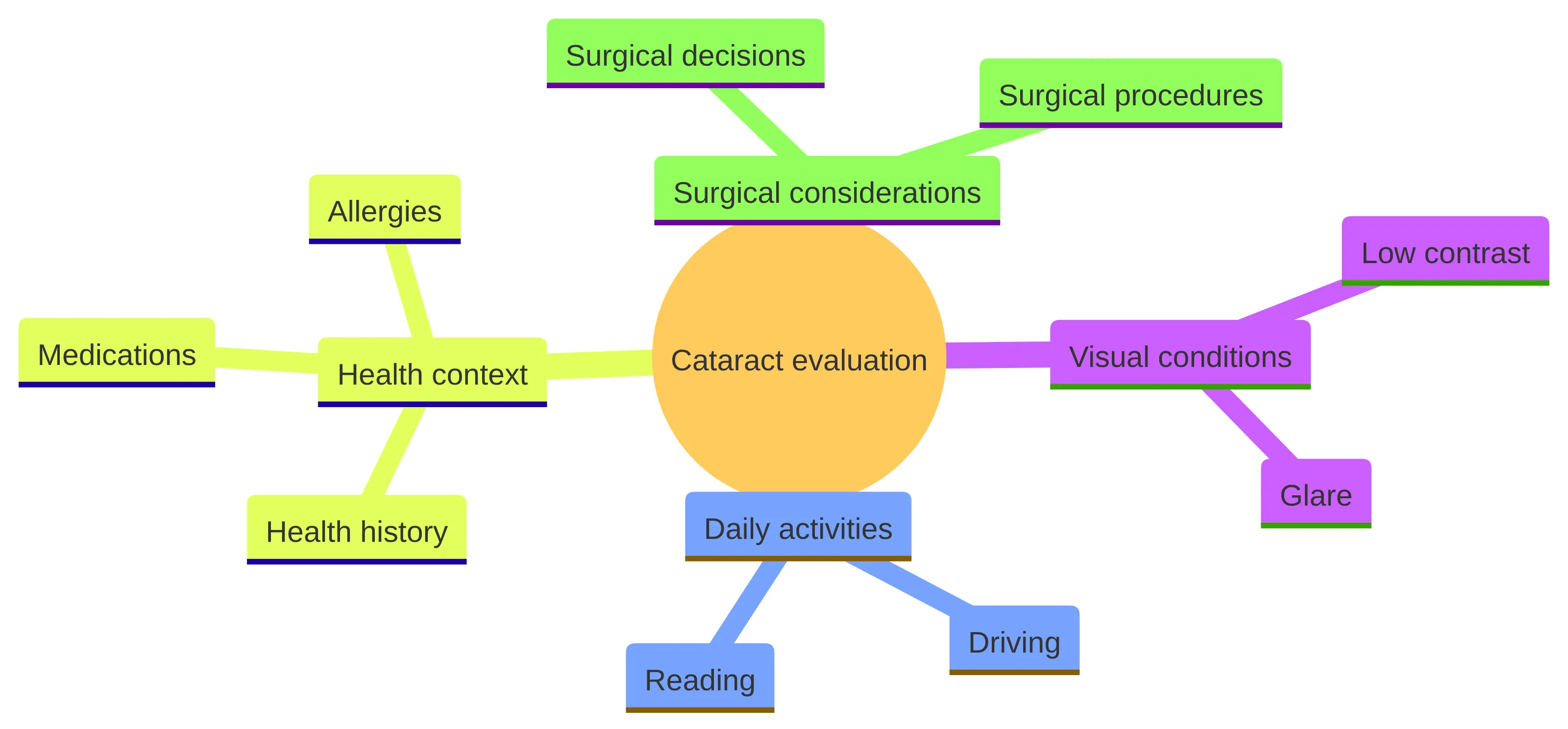
A cataract evaluation connects the symptom with examination findings and with the visual tasks that matter to you. It may consider glare and contrast, reading, driving, health history, medications, allergies, and factors that could affect surgery. This information gives an eye-care professional context for deciding whether cataract surgery and intraocular lens options should be discussed.
If an examination identifies cataract-related lens clouding, cataract surgery involves removing the clouded natural lens and replacing it with an artificial intraocular lens. The evaluation comes first; a symptom description alone cannot determine whether surgery or a particular lens option belongs in the conversation.
Your first decision is therefore about timing, not lens selection. Use the next sections to organize what you have noticed, identify warning signs, and understand what an examination can clarify. Cataract surgery and intraocular lens options come later, only if the evaluation shows that cataract care is clinically appropriate.
Bring visual priorities to the cataract evaluation
The history for a cataract evaluation centers on how vision functions in daily life. Note whether the change developed gradually or suddenly, whether one or both eyes are affected, and whether glare or reduced contrast makes reading, driving, or other tasks harder. Also note pain, redness, flashes, or floaters, because an eye-care professional considers these associated symptoms when assessing blurry vision.
Describe the symptom in ordinary terms rather than deciding what it means. Loss of detail is not the same as loss of contrast, and a visual-field problem may be experienced as missing steps or difficulty seeing words while reading. These observations give an eye-care professional a fuller history without establishing cataracts or determining a procedure or lens.
Bring relevant health history, medications, allergies, and information about prior eye disease, surgery, or trauma to the appointment. This information helps the professional connect visual priorities and health information with examination findings before discussing cataract care.
Acute vision loss needs prompt assessment. The assessment considers when it began, how long it has lasted, whether one or both eyes are affected, and associated symptoms such as pain, flashes, floaters, headache, or jaw pain. If your vision changed abruptly, do not wait for the pattern to become clearer before seeking professional guidance.
A sudden change deserves the same attention even when it is painless. The absence of pain does not tell you that the change is a cataract symptom or that it can safely wait. When you seek prompt guidance, state whether the change began suddenly, how long it has lasted, whether one or both eyes are affected, and whether pain, flashes, floaters, headache, or jaw pain accompanied it. If you are uncertain whether a sensation qualifies as pain or a visual effect qualifies as a flash, describe what you noticed in plain language. These details do not diagnose the cause, but they help the eye-care professional assess an acute change without relying on a vague label such as blur.
A short symptom note can make your next conversation more precise. Record the approximate start, the affected eye or eyes, whether the change is progressing, and any accompanying symptoms. Bring that description to an eye-care appointment or provide it when asking how urgently you should be assessed.
Your description is preparation, not a substitute for an examination. The same symptom can require different next steps depending on its timing and associated signs.
What lens clouding can and cannot tell you
A cataract can fit a gradual pattern because it involves clouding of the eye’s natural lens. Reduced contrast and glare may also be part of the experience, especially when reading, driving, or other visual tasks become harder. These features are reasons to describe the change during an eye-care assessment, not a way to establish the cause at home.
The examination determines whether lens clouding is present and whether the visual effect belongs in a cataract-surgery discussion. If it does, daily visual priorities and relevant health information provide context for discussing the procedure and intraocular lens options.
The effect of the change on your daily tasks is useful information during a cataract evaluation. Notice whether glare or reduced contrast affects reading, driving, or other activities that require clear vision. These observations help describe how the symptom affects you beyond a simple statement that your sight is less sharp.
Functional difficulty does not by itself prove that a cataract is present or determine whether surgery is appropriate. It gives the eye-care professional a clearer account of what you are experiencing and what needs to be examined.
Some medical causes of blurred vision are less common but more urgent than nonmedical causes. For that reason, gradual blur should not become a reason to dismiss a new sudden change, pain, flashes, floaters, or other warning signs. If the pattern changes, raise the level of concern rather than continuing to assume that a cataract explains it.
Separate urgent vision changes from cataract planning
Sudden, painless vision loss in one eye can have an urgent cause and should not be ignored.
When blurry vision has no sudden or alarming pattern, a comprehensive examination can clarify whether a cataract finding is present and whether a cataract-focused discussion is appropriate. To choose among the levels in this guide, ask the questions in order. First, was the change sudden, acute, or rapidly changing? If so, seek prompt professional assessment rather than treating it as a routine cataract question. Second, is any warning sign described in the next section present? If so, the pattern can require urgent attention. Third, if neither pattern is present, is the blur persisting, changing, affecting daily tasks, or still unexplained? Those are reasons to arrange a comprehensive examination. If you are considering brief monitoring, keep it limited to a stable, non-sudden symptom without listed warning signs, and do not treat monitoring as proof that the cause is harmless. Arrange an examination if the symptom persists, changes, or remains unexplained.
Warning patterns to report before cataract planning
Severe redness with thick discharge and pain may signal infection. These findings do not establish that cataracts explain the blur.
Severe eyelid swelling, fever, painful eye movements, or new double vision can require emergency care.
Vision changes with inflammation, or an infection after eye surgery or trauma, warrant urgent eye-care attention. Tell the service about the recent procedure or injury, when the vision changed, and whether redness, discharge, pain, or swelling is present.
These signs set a clear boundary around waiting. A cataract evaluation may be appropriate for gradual, unexplained changes, but postoperative infection, trauma-related symptoms, and inflammatory vision changes need urgent attention first.
How examination findings shape cataract discussion
A comprehensive eye examination can detect eye abnormalities, serious eye disease, and some systemic conditions that show signs in the eyes. For a cataract question, it also connects the symptom history with findings about the eye’s lens and with the visual tasks affected.
The assessment may consider when the change began, whether it is progressing, whether one or both eyes are involved, and associated symptoms. It can also include glare and contrast problems, effects on reading or driving, health history, medications, allergies, and factors that could affect surgery. These details provide the context for deciding whether cataract surgery and intraocular lens options should be discussed.
Some eye and vision problems have no obvious signs or symptoms. An eye-care professional must assess the individual cause and treatment rather than relying on the appearance of blur alone.
Arrange a comprehensive eye examination when blurry vision persists, changes, or has no clear explanation. An examination can also be appropriate when you have not seen an ophthalmologist for an extended period or have never had an eye examination. That timing question is separate from deciding whether today’s blur is urgent: it reflects the preventive role of comprehensive assessment. Recommended intervals vary with age and risk factors, so this guide cannot set a schedule for you. If you are unsure when your last examination occurred, or whether your history changes the appropriate timing, ask an eye-care professional rather than using the absence of dramatic symptoms as proof that an examination is unnecessary. A normal-feeling day does not establish that every eye condition is absent, because some eye and vision problems have no obvious signs or symptoms. The purpose of the appointment is therefore broader than confirming or excluding a cataract: it is to assess the visual system and determine what, if anything, needs follow-up. Arrange prompt assessment instead when the change is sudden or accompanied by the warning signs described earlier. The purpose is not to force every symptom into a cataract category; it is to identify what your eyes are showing and what next step follows.
What cataract evaluation considers beyond visual sharpness
A cataract evaluation may review glare and contrast problems, effects on driving or reading, health history, medications, allergies, and factors that could affect surgery. The conversation therefore extends beyond whether an eye chart looks clear on a particular day. That broader view helps separate two questions: what visual change is occurring and how it affects daily tasks, and whether the findings and health context support discussing cataract surgery. Difficulty with a task is important to report, but it is not a stand-alone basis for treatment. Likewise, a lens discussion should account for medications, allergies, and other surgical considerations rather than focusing only on the visual result a person hopes to achieve. The evaluation is the place to identify which questions can be answered from the findings and which require further professional assessment.
Describe the situations that make your vision difficult. Reading in dim or bright conditions, coping with glare, driving, or completing work and leisure activities may reveal how the change affects your daily life. Your health history and medication list also give the eye-care professional context for discussing possible surgery.
Your preparation can stay practical:
- Note when glare or reduced contrast first became noticeable.
- Identify reading, driving, or other tasks that have changed.
- Bring a current list of medications and known allergies.
- Mention prior eye disease, eye surgery, trauma, or other health concerns relevant to your eyes.
- Describe whether the problem affects one eye or both and whether it is changing.
This list helps you give a complete account during the evaluation. It does not determine your surgical candidacy or select a lens.
Visual sharpness is only one part of the cataract conversation. Glare, contrast, reading, driving, health history, medications, allergies, and surgical considerations all belong in the assessment when cataract care is being discussed. Let the examination connect those details rather than choosing treatment from a single symptom.
Discuss surgery and intraocular lenses only after the cause is established
An examination can show whether a cloudy lens is contributing to the vision problem before cataract surgery is discussed. That finding does not, by itself, establish whether surgery is appropriate, which timing applies, or which lens option fits your eyes and priorities.
Once an examination is complete, keep four parts of the decision separate. First, the professional identifies what the examination shows about the eye’s lens and the rest of the visual system. Second, the professional considers whether those findings fit the changes you described, such as gradual blur, glare, reduced contrast, or difficulty with a particular task. Third, the professional considers how much those changes affect reading, driving, work, or other activities. Fourth, the professional reviews health history, medications, allergies, prior eye disease, surgery, or trauma and any factors that could affect a procedure. This sequence turns a general complaint into a cataract-specific discussion without treating any single observation as a diagnosis.
Visual priorities should be described with enough detail to distinguish the task from the condition. Reading in dim light, reading in bright light, driving, glare, reduced contrast, and other activities may not challenge vision in the same way. Reporting which situation is difficult gives the professional a more useful account than saying only that vision is blurry. It also keeps the conversation focused on what you want cataract care to address, without promising that one procedure or lens option will solve every visual difficulty.
A lens finding and a treatment decision are not the same conclusion. Clouding may be present while the relationship between that finding and your symptoms, the effect on daily activities, or the appropriateness of surgery still requires discussion. Conversely, reporting trouble with reading or glare is valuable but does not by itself show that lens clouding is responsible. Keeping these links explicit helps prevent a symptom, an examination finding, and a procedure from being treated as interchangeable.
The health-history portion has a practical purpose rather than being background paperwork. Medications, allergies, prior eye disease, surgery, trauma, and other relevant health information may affect surgical decisions or procedures. Sharing them before a treatment conversation helps the eye-care professional interpret the examination in context and identify which questions still need professional assessment. This information does not select an intraocular lens, but leaving it out can make the discussion less complete.
If surgery is clinically appropriate, the later conversation can connect the proposed treatment with the findings and priorities already discussed. The useful decision criterion is not simply whether an intraocular lens exists as part of cataract surgery. It is whether the professional has explained what finding supports the cataract connection, which reported visual difficulty the discussion is addressing, and how your health information enters the surgical conversation. If one of those links remains unclear, ask for clarification rather than treating a general description of lens options as a personal recommendation.
A practical way to retain that logic is to leave the appointment with a short summary under three headings: examination finding, daily effect, and next discussion. Under examination finding, record what the professional explained about lens clouding and any other relevant findings. Under daily effect, note the conditions or activities that remain difficult, such as glare, contrast, reading, or driving. Under next discussion, note whether cataract surgery or lens options are being discussed, what further assessment is needed, or what remains undetermined. This summary is not a diagnosis or treatment plan. It simply gives future conversations a clearer starting point and keeps the path from symptom to finding to option understandable.
The surgery discussion belongs after an examination has established that cataracts are contributing to your vision problem. The evaluation can connect your visual difficulties, health history, medications, allergies, and other surgical considerations before any treatment conversation moves forward.
You can ask how the finding relates to your reading, driving, glare, or contrast concerns. The answer should be based on your examination and health information, not on the fact that an intraocular lens is available as a general treatment component. Useful questions keep the conversation tied to evidence from your own evaluation: What finding suggests that the cloudy lens is contributing to the blur? Which of the reported visual tasks does that finding help explain? Are there health-history, medication, allergy, or prior-eye issues that affect the surgical discussion? If cataract surgery is being considered, what is the purpose of the proposed intraocular lens option in relation to the concerns you described? These questions do not produce a lens recommendation in advance; they help you understand how the professional moves from examination findings to an individualized discussion.
Lens options should be discussed as part of a professional cataract conversation rather than selected from a general description. Your symptoms may point toward an evaluation, but they cannot select an intraocular lens or establish that cataract surgery is the right treatment.
Use examination findings to discuss cataract options
We offer eye-care services.
A cataract evaluation can help turn an uncertain visual change into a focused conversation about the cause and the options that may follow if cataract care is appropriate.
Questions to ask before discussing blurry vision or cataract care
What are the common causes of blurry vision?
Blurry vision can have many causes, including both common nonmedical and less common medical issues. Some medical causes are considered more urgent than nonmedical ones.
What should I do if my blurry vision persists?
If your blurry vision persists, changes, or has no clear explanation, arrange a comprehensive eye examination to identify the underlying cause.
How does cataract evaluation relate to blurry vision?
A cataract evaluation may review glare and contrast problems, effects on daily activities, health history, medications, and factors that could affect surgery.
What happens during a cataract evaluation?
During a cataract evaluation, an eye-care professional will assess your visual difficulties, review your health history, and discuss potential surgical options if cataracts are contributing to your symptoms.
What is the role of an eye examination in understanding blurry vision?
A comprehensive eye examination can detect eye abnormalities, serious eye diseases, and some systemic conditions that may show signs in the eyes.
What should I prepare for my eye examination regarding blurry vision?
Prepare a clear account of when your blurry vision began, whether it affects one or both eyes, any associated symptoms, and how it impacts your daily activities.