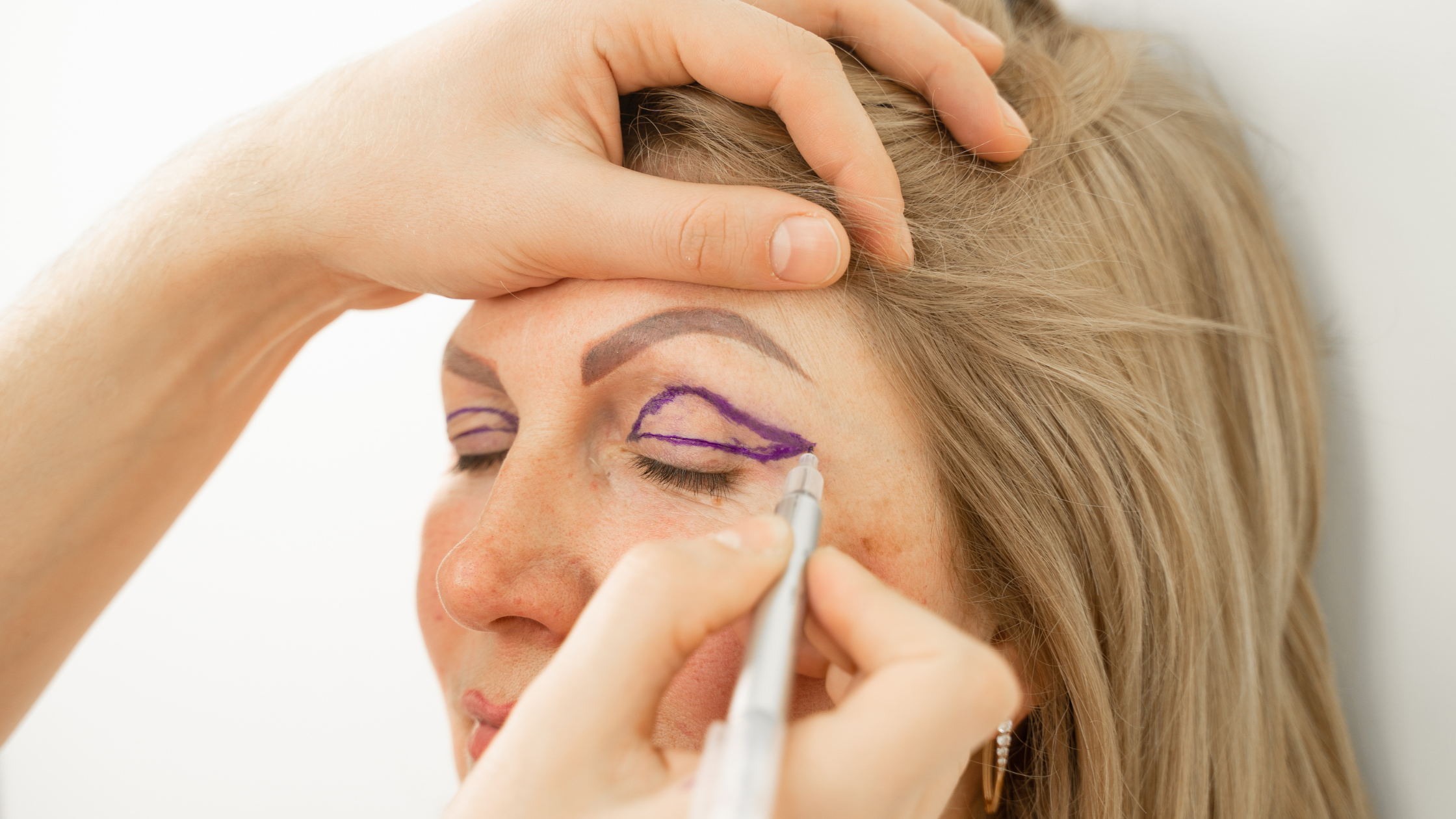
Ptosis repair and blepharoplasty both treat droopy eyelids, but they fix different problems. Ptosis repair tightens the muscle that lifts the eyelid, correcting a weak or stretched levator muscle. Blepharoplasty removes excess skin and fat from the eyelid, correcting sagging tissue that blocks vision. Many patients have both conditions at once. At DLV Vision, our oculoplastic team evaluates eyelid position, muscle strength, and vision impact to determine which procedure — or combination — fits your eyes.
Quick Takeaways
-
- Ptosis is a drooping eyelid caused by a weak or stretched levator muscle, the muscle that lifts the eyelid.
- Blepharoplasty removes excess eyelid skin and fat but does not fix muscle weakness.
- Both conditions can block your vision, and both can occur in the same eye at the same time.
- An eye doctor diagnoses the difference using an exam that measures eyelid height, muscle strength, and visual field.
- Schedule an eye exam if drooping eyelids affect your vision, appearance, or cause eye strain and headaches.
What Is the Difference Between Ptosis and Excess Eyelid Skin?
Ptosis (TOE-sis) means the eyelid sits too low because the levator muscle can no longer lift it fully, and the eyelid edge can cover part of the pupil. Ptosis repair, a form of oculoplastic surgery at DLV Vision, shortens or reattaches this muscle to restore normal eyelid height.
Excess eyelid skin is different: the muscle works fine, but loose skin and fatty tissue hang over the eyelid crease and block vision the same way ptosis does. The fix is surgical removal of skin and fat, not muscle repair. Aging often causes both at once, so many patients at DLV Vision need a combined procedure to lift the muscle and remove excess skin.
What Causes Droopy Eyelids, and What Are the Signs?
Age-related stretching of the levator muscle causes most adult ptosis. Long-term contact lens wear, prior eye surgery, and eyelid injury raise the risk. Excess eyelid skin comes from a separate cause: loss of skin elasticity and collagen over time. According to the American Academy of Ophthalmology, both conditions become more common after age 50.
Ptosis lowers the eyelid margin over the iris, so patients raise their eyebrows or tilt their head back to see, leading to forehead fatigue. Excess skin hangs over the lash line, creating a heavy, hooded look that blocks upper and side vision. See an eye doctor promptly if one eyelid suddenly droops more than the other or if double vision develops alongside it.
How Are Ptosis and Excess Skin Diagnosed and Treated?
An ophthalmologist measures the distance between the eyelid margin and the pupil’s center, then tests levator muscle strength to confirm ptosis. For excess skin, the doctor performs a visual field test with the skin lifted; if vision improves, blepharoplasty is likely to help. The National Eye Institute notes that documented vision loss from either condition often qualifies for insurance coverage, while purely cosmetic requests typically do not.
Ptosis repair reattaches or shortens the levator muscle in an outpatient procedure, with most patients resuming normal activity within days. Blepharoplasty removes skin and fat through an incision hidden in the eyelid crease; swelling and bruising generally resolve in one to two weeks. Our surgeons at DLV Vision often combine both procedures in a single visit when a patient has both conditions.
What Should You Expect at Your Appointment?
Your visit includes eyelid measurements, a muscle strength test, and a visual field test to document how much your eyelids block your vision. The doctor then reviews whether ptosis repair, blepharoplasty, or a combined approach fits your eyes.
If you’re noticing heavy or drooping eyelids in Ventura, Westlake Village, Camarillo, Simi Valley, Thousand Oaks, Oxnard, or Newbury Park, the oculoplastic team at DLV Vision can evaluate whether ptosis, excess skin, or both are affecting you. Schedule an appointment at DLV Vision or call (805) 987-5300.
Frequently Asked Questions
Is ptosis repair the same as an eyelid lift?
Ptosis repair is a type of eyelid surgery, but it specifically tightens the muscle that lifts the eyelid rather than removing skin. People often use “eyelid lift” loosely to describe either ptosis repair, blepharoplasty, or both together.
Will insurance pay for blepharoplasty or ptosis repair?
Insurance often covers these procedures when a visual field test shows the eyelid blocks functional vision. Purely cosmetic requests without documented vision impairment are typically not covered. Your exam results determine what qualifies.
How long does recovery take after eyelid surgery?
Most ptosis repair patients return to normal activities within a few days. Blepharoplasty recovery from swelling and bruising generally takes one to two weeks. Combined procedures follow a recovery timeline closer to blepharoplasty alone.
Can droopy eyelids come back after surgery?
Eyelid tissue continues to age after surgery, so some patients notice gradual changes over many years. Following your surgeon’s post-operative instructions supports long-term results, and a comprehensive eye exam is the best way to track any new changes.
What happens if droopy eyelids are left untreated?
Untreated ptosis or excess eyelid skin can progressively block more of the visual field, leading to chronic eye strain, headaches, and reliance on head-tilting or eyebrow-raising to see clearly. An eye doctor can evaluate how much your vision is affected and discuss treatment timing.
Who performs ptosis repair and blepharoplasty?
Oculoplastic surgeons, who are ophthalmologists with additional training in eyelid and orbital surgery, typically perform these procedures. A general ophthalmologist or optometrist can perform the initial exam and refer patients for surgical evaluation.
Reviewed by the clinical team at DLV Vision. Last reviewed: July 2026. The information in this article is for educational purposes only and does not substitute for a comprehensive eye examination by a qualified eye care professional.
Ready to Have Your Eyelids Evaluated?
Droopy eyelids from ptosis or excess skin can affect both your vision and how you look. If you’re in Ventura County or Los Angeles County, the oculoplastic team at DLV Vision offers eyelid evaluations at locations including Ventura, Westlake Village, Camarillo, and Thousand Oaks. Schedule an appointment at DLV Vision or call (805) 987-5300.